Sweety Petty: A Magical Handwritten Font
There I was, staring at a blank brand board, trying to find the right visual voice for a new boutique coffee shop. The client wanted something warm, approachable, and a little playful—something that felt like a friendly hug from the first sip of their signature latte. That’s when I pulled out Sweety Petty, a font that instantly brought a sense of whimsy and charm to the table.
The Personality of Sweety Petty
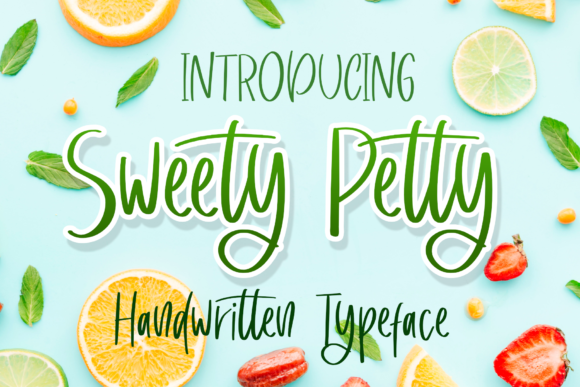
Sweety Petty is a handwritten script with a modern twist. Its strokes are fluid, its curves are soft, and its overall vibe is one of laid-back elegance. It doesn’t shout, but it definitely whispers, “I’m here to make your design feel special.” This font has a personality that’s both fun and sophisticated, making it perfect for brands that want to stand out without being too serious.
When I tested it on a logo concept, it felt like the design had finally found its soul. The font’s natural flow made the logo feel more personal, as if it were written by hand rather than typed on a keyboard. It added a human touch that other fonts just couldn’t replicate.
Real-World Applications
Using Sweety Petty in a branding project meant testing it across multiple assets. On a business card, it looked elegant and easy to read, even at smaller sizes. On a packaging mockup, it gave the product a sense of authenticity, as if it were crafted with care. For a website header, it added a pop of personality that made the site feel more inviting.
On social media layouts, Sweety Petty stood out as a strong visual element. It worked well for Instagram posts, especially when paired with bold colors or minimalist backgrounds. It also did well in editorial design, where a bit of flair can make all the difference.
Strengths and Limitations
Sweety Petty shines as a display or headline font. It’s not designed for long blocks of text, and that’s okay. Its beauty lies in its ability to catch the eye and add a unique touch to a design. When used in short phrases or as an accent, it can elevate a brand’s visual identity significantly.
However, there are some limitations. At smaller sizes, the font can become less legible, especially in low-contrast settings. For this reason, it’s best avoided in body text or formal corporate environments. If you’re designing for a skincare brand or a bakery, it might be perfect—but if you’re creating a legal document or a financial report, you’ll want to look elsewhere.
Font Pairing and Design Tips
Pairing Sweety Petty with other fonts can help balance its whimsical nature. A serif font like Playfair Display or a sans serif like Lato can provide contrast and structure, allowing Sweety Petty to shine without overwhelming the design. When working with a modern typography system, it’s important to maintain hierarchy and readability.
For a creative studio or handmade shop, Sweety Petty can be a great choice for logos, headers, and promotional materials. It works well when used sparingly, as a focal point rather than a background element. Testing it in different contexts is key—whether it’s on a shop sign, a product label, or a printed flyer, the font should feel right for the project.
Practical Considerations
Before using Sweety Petty in client work, it’s wise to test it thoroughly. Try it on different surfaces, in various sizes, and with different color schemes. Make sure it aligns with the brand’s tone and goals. If the font feels too casual for the project, it might not be the best fit.
Also, check the licensing details carefully. Commercial use of Sweety Petty requires proper permissions, especially if it’s going to be used in templates, merchandise, or print-on-demand products. Always review the terms to avoid any legal issues down the line.
As a designer, I’ve found that Sweety Petty is a versatile tool that adds a unique flavor to any project. It’s not the right font for every brand, but when it fits, it can make a big difference. Whether you’re working on a café refresh, a skincare line, or a creative studio identity, Sweety Petty offers a fresh and magical way to express your brand’s personality.